
ACOP L8 Compliance: A Guide for Building Managers
ACOP L8 sets out how Legionella risk must be assessed and controlled. Here is what it obliges a duty holder to do, the records you have to produce, and the gaps most often found in commercial buildings.
What is ACOP L8?
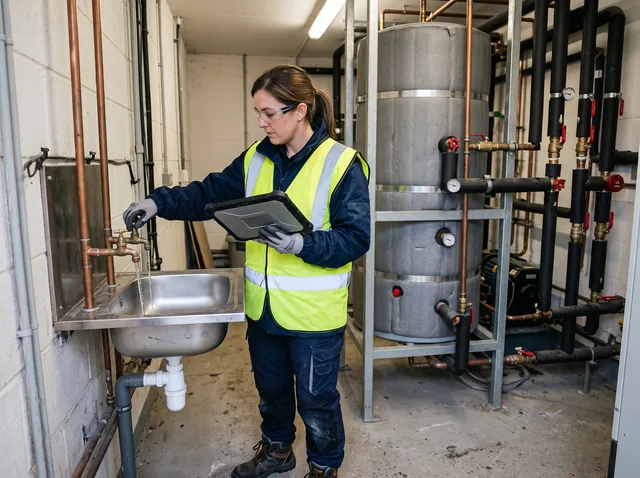
ACOP L8 is the Health and Safety Executive Approved Code of Practice on the control of legionella bacteria in water systems. It sets out the practical steps a duty holder is expected to take to identify, assess and control the risk of exposure to Legionella from a water system used at work.
The current edition is the fourth, published in 2013, so a policy citing an earlier one is out of date. It applies wherever water is used or stored in connection with a business and droplets could be created and inhaled.
It is not an Act and not a set of regulations. You may control the risk another way, but the Code has a special legal status: if you are prosecuted and it is shown you did not follow its relevant provisions, you must demonstrate you complied some other way, or a court will find you at fault.
Approved code text is printed in bold and the rest is guidance. The bold text covers the risk assessment, the responsible person, the control scheme and the review of controls.
What ACOP L8 sits alongside
There is no Legionella Act. The duties come from general health and safety law.
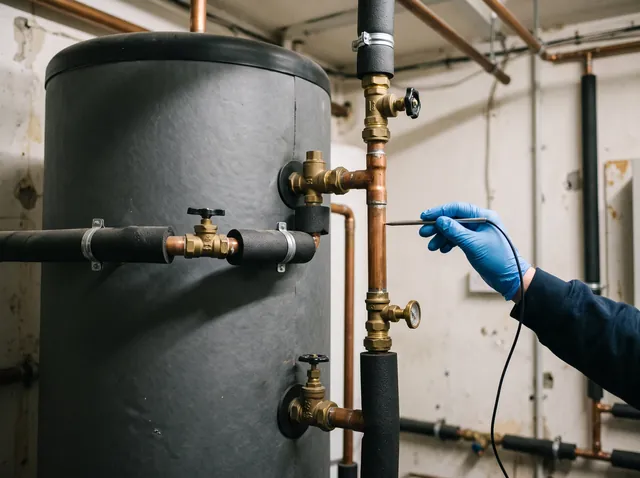
- Health and Safety at Work etc. Act 1974 Section 2 covers employees, section 3 anyone else affected, section 4 those in control of premises. A section 3 duty cannot be passed on by contract.
- COSHH 2002 Legionella bacteria are a biological agent, so COSHH applies. The Code covers regulations 6, 7, 8, 9 and 12.
- Management Regulations 1999 Risk assessment, access to competent help, and co-operation between employers sharing a workplace.
- HSG274 technical guidance The technical detail left L8 in 2013 and was published separately in three parts. Part 2, hot and cold water systems, is the relevant one. It is guidance, not an approved code.
For the legal picture in more depth, read our explanation of your legal duties on Legionella.
Who is the duty holder?
The duty holder is the employer where the risk from their undertaking is to employees or others, a self employed person where the risk is to themselves or others, or the person in control of the premises or systems in connection with work. That covers a landlord who lets a building but keeps responsibility for maintaining it.
The common failure in a managed building is not technical: nobody has established who holds the duty. Tenants assume the landlord deals with it, the landlord assumes the managing agent does, and the agent assumes it sits in a facilities contract. Record it in writing.
You can appoint contractors to do the work. You cannot appoint away the duty. The Code also requires a competent responsible person with the authority and knowledge to make the controls happen, plus a deputy, since absences cause gaps in the logs.
The Legionella risk assessment
A suitable and sufficient risk assessment is the starting point for everything else. It identifies the sources of risk in the water system, the people who could be exposed and the precautions needed. The duty holder must make sure it is carried out by someone competent.
It covers the whole system, not just the plant room: an asset register and schematic, the incoming supply, storage tanks, calorifiers, pipework, outlets, dead legs, low use areas and anything creating a spray.
It is not a one off exercise. It must be reviewed regularly and whenever it may no longer be valid: a change to the system or its use, a change in occupancy or responsible person, controls shown to be ineffective, or a linked case of Legionnaires' disease.
For the survey itself, see what a Legionella risk assessment involves. We carry out Legionella risk assessments in London for residential and commercial properties, with same day assessments where a review is urgent.
What a water safety plan should include
The findings feed into a written control scheme, often called the water safety plan.
It should set out the temperature regime, the flushing schedule for little used outlets, the inspection and cleaning programme for storage tanks, the procedure for vacancy, and the action to take when a check fails.
Temperature is the main control. HSG274 Part 2 describes hot water stored at 60°C and reaching 50°C within one minute at the outlet, and cold water below 20°C within two minutes. Legionella multiplies between roughly 20°C and 45°C.
| Task | Typical frequency |
|---|---|
| Sentinel outlet temperatures, hot and cold | Monthly, nearest to and furthest from the source. |
| Representative outlet temperatures | Rotating across the year. |
| Calorifier flow and return temperatures | Monthly. |
| Cold water storage tank temperatures | Six monthly, at the inlet and the outlet. |
| Cold water storage tank inspection | Annually, cleaned and disinfected if the condition requires it. |
| Flushing of little used outlets | Weekly, until the temperature stabilises. |
| Shower heads and hoses | Quarterly clean, descale and disinfect. |
These are usual starting frequencies, not a legal minimum. Your assessment can justify more, or less on a low risk system. See how water tank cleaning is documented and what Legionella testing and water sampling involves.
The records you have to keep
Record keeping is part of the duty. You must record the risk assessment, the control scheme, the person responsible, and the monitoring, inspection and remedial work done. Records should be kept while current and for at least two years after, with monitoring results kept for five years.
An inspector, insurer or incoming tenant asks for a predictable set of documents.
- The current risk assessment, dated, with the assessor named.
- The control scheme: what is done, how often, by whom.
- The duty holder, responsible person and deputy, named.
- Temperature logs, with failures and the action taken.
- Tank inspection reports and disinfection certificates.
- Sample results from a UKAS accredited laboratory.
- A remedial action log, each item closed with evidence.
The last is the one most often missing. An assessment listing twenty recommendations with no evidence any were actioned is worse than useless: it proves you were told.
Common gaps found in commercial buildings
The same issues turn up again and again when a building is reviewed.
- A stale assessment A survey was done, but occupancy or plant has changed since and nobody has reviewed it.
- No named responsible person Monitoring is assumed to be somebody's job, nobody is appointed in writing, and the log has months missing.
- Tanks nobody has opened in years Poor lids, missing screens, corrosion and sediment are routine findings in older buildings.
- Dead legs and redundant pipework Common after refurbishment. Capped sections still on the live system hold stagnant water.
- No procedure for low use Vacant floors and unlet flats are the main source of stagnation, and few plans say who flushes what.
Risk also shifts with the seasons. Warm weather pushes cold water storage above 20°C where it is borderline in winter, so see our guide to summer Legionella risk.
A practical compliance checklist
Work through these in order. Each step depends on the one before it.
- Confirm the duty holder Establish it from who controls the water system and record it. Where a lease splits responsibility, write the split down.
- Appoint the responsible person Name them and a deputy in writing, with the authority and knowledge to act.
- Find the current assessment Check the date, the author, and whether it describes the system you have now.
- Close out the recommendations Put an owner and a date against each action, and record the evidence when it is done.
- Update the control scheme Set out every routine task, its frequency, who does it and what happens when a check fails.
- Audit the monitoring Pull twelve months of temperature logs and look for missing months and unactioned failures.
- Inspect the tanks Lid, screens, insulation, water condition and temperature. Clean and disinfect if needed.
- Set the review date Diarise the next review and list the events that would trigger an earlier one.
Getting compliant
If several of those gaps sound familiar, the route back is a fresh risk assessment and a realistic programme of works. The assessment tells you where the system stands, the control scheme turns that into a routine, and the records prove it.
We work with commercial and residential clients across London and the surrounding areas, from our base in Brentford, covering Legionella risk assessments, sampling and testing, tank cleaning, disinfection and inspection, and chlorination. See our commercial water hygiene services.
Tell us the property type, how many outlets and tanks are involved, and whether you hold a current assessment. Call 020 4532 7773 or use the form to review your compliance.
Not sure your building would stand up to an inspection?
We will assess the system, tell you what is missing and set out what needs doing, in priority order.