
Chlorination Services in London
We flush, disinfect, sample and certify water systems across London, from a single new supply pipe to the pipework and storage tanks of a whole building.
- Mains, new pipework, tank and remedial chlorination
- Samples analysed by a UKAS accredited laboratory
- Certificate on completion, same day certification available
What is chlorination?
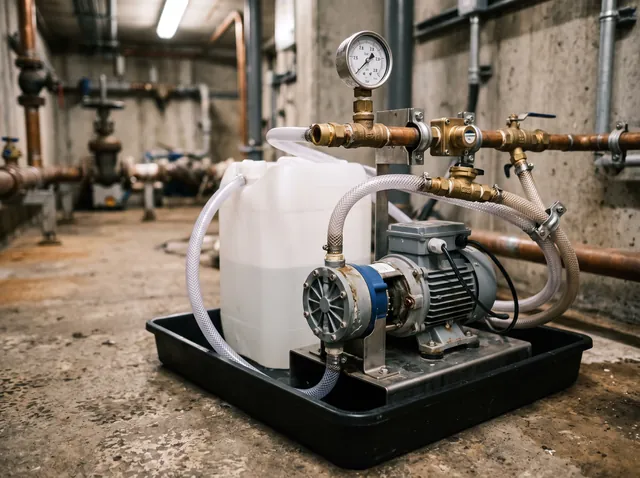
Chlorination is the controlled disinfection of a water system with a chlorine based solution. The system is filled and dosed to a set concentration, held for a specified contact period so the solution reaches every surface, then flushed until the chlorine residual returns to normal. A sample is then analysed to confirm the water is safe to use.
It is a measured process, not simply running a tap through or tipping chlorine into a tank. The concentration is checked around the system during the contact period, the residual is neutralised and flushed out, and the result is proven by laboratory analysis. New pipework is never sterile: cut ends, jointing compounds, dust, swarf and standing water all give bacteria somewhere to establish, and a biofilm inside a pipe will not clear itself.
When do you need chlorination?
If any of these describes your building or your project, a certificate will almost certainly be asked for.
- New pipework Any newly installed distribution system is disinfected before it is put into service.
- A new mains connection New pipework must be chlorinated, flushed and certified before a connection is approved. See mains chlorination and Thames Water requirements.
- Refurbishment Extending, rerouting or replacing pipework opens the system up, so it needs disinfecting again before handover.
- After repairs Any repair that exposes the inside of a pipe, fitting or tank is a contamination route.
- After a failed sample Where laboratory analysis comes back unsatisfactory, chlorination is the usual remedial step before resampling.
- Reoccupying a vacant building Water left standing in an empty building should be treated as suspect before residents or staff return.
- A positive Legionella result Disinfection forms part of the remedial response, alongside the controls set by your Legionella risk assessments in London.
- Sector compliance Care homes, schools, healthcare settings and food premises are commonly asked for current certification.
Our chlorination services
Four distinct jobs, all of them ending in sampling and a certificate.
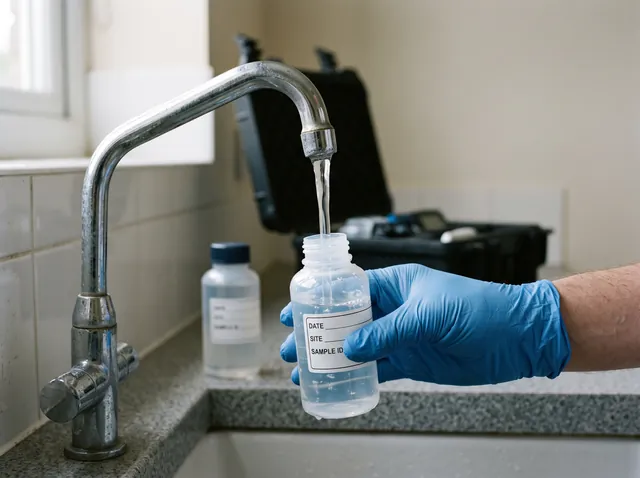
Mains chlorination
The supply pipe itself, the run between the connection point and the building. This is the disinfection your water undertaker is asking about when a connection is held up pending a certificate. We fill and dose the new main, hold it for the contact period, monitor the concentration along its length, flush it back to background and sample it. See mains water chlorination.
New pipework and new system chlorination
The disinfection sits at the end of the commissioning sequence. Pipework is flushed to clear debris and standing water left from installation, then the whole network is dosed, held, neutralised, flushed and sampled. Booking it early keeps handover on schedule. See new water system chlorination.
Tank chlorination and disinfection
Tanks are disinfected alongside the pipework they feed, usually as the last stage of a clean. The tank is drained and physically cleaned first, because chlorine will not disinfect through sediment or scale. See water tank disinfection, and our water tank services.
Remedial chlorination
For a failed sample, a stagnant system, a contamination event, or a risk flagged by an assessment. The method is the same, but the emphasis shifts to finding the cause, so the resample is not a repeat of the first failure. Where the water is for drinking or food use, see potable water chlorination.
Flushing, water sampling and testing
Flushing removes the debris and standing water that would otherwise consume the disinfectant before it reaches the far end of the system, and afterwards it clears the chlorine so nothing corrosive is left behind. Sampling is the evidence, the difference between saying a system is clean and showing it.
Samples are analysed by a UKAS accredited laboratory, UKAS being the national body that assesses laboratories for technical competence. That matters commercially too, because results from an unaccredited laboratory can be rejected. Analysis of a potable system typically covers total viable counts, coliform bacteria and E. coli, with Legionella where the risk assessment calls for it.
- BS8558 The British Standard our chlorination work follows
- UKAS Accredited laboratory analysis on every sample
- ACOP L8 The HSE Approved Code of Practice behind the work
Your chlorination certificate
A chlorination certificate is the document confirming that a water system has been disinfected to recognised standards and is safe to use. It records the address and system disinfected, the date, the method and standard followed, the contractor who did the work, and the laboratory results where sampling was carried out.
The certificate is what other people ask you for. Your water undertaker wants it before a connection is commissioned, and building control, an insurer or an auditor may want it later. Keep it on file with the laboratory report attached, because it carries little weight without the analysis behind it.
It is a point in time record, not an open ended guarantee, and later work that opens the pipework up means a fresh disinfection and a new certificate. Our guide to what a chlorination certificate covers explains this in detail. Same day certification is available, so tell us your handover date.
The standards we work to
Three documents govern this work, and they are often quoted loosely.
BS 8558
The British Standard giving guidance on the design, installation, testing and maintenance of services supplying water for domestic use within buildings. It is the practical UK companion to BS EN 806 and the standard normally cited for flushing, disinfection and commissioning.
BS EN 806-4
The European standard covering installation of drinking water systems inside buildings, including the flushing and disinfection procedures applied before a system enters service. UK disinfection normally follows BS EN 806-4 and BS 8558 together.
ACOP L8
The Health and Safety Executive's Approved Code of Practice and guidance, Legionnaires' disease. The control of legionella bacteria in water systems, fourth edition, published 2013 and still current. It is not legislation. It gives practical advice on complying with the Health and Safety at Work etc. Act 1974 and the Control of Substances Hazardous to Health Regulations 2002, and it carries a special legal status: if you are prosecuted and shown not to have followed its relevant provisions, you must demonstrate you complied some other way. Supporting technical detail sits in HSG274 Part 2.
How the process runs, step by step
The same nine stages apply to one supply pipe or a whole building.
- Survey We assess the size, layout and materials of the system and agree access, isolation points and timing.
- Isolate The section treated is isolated and outlets are labelled so nobody draws water during the works.
- Pre clean and flush The system is flushed to clear debris, sediment and standing water. Tanks are physically cleaned first.
- Dose The system is filled and dosed with a chlorine based disinfectant at a concentration appropriate to the standard.
- Dwell The solution is held against the surfaces for the specified period, with the concentration checked around the system.
- Neutralise Residual chlorine is neutralised so nothing corrosive is discharged or left standing.
- Flush to background The system is flushed until the residual is back within the normal range for the incoming supply.
- Sample Samples are taken from agreed points and sent to a UKAS accredited laboratory.
- Certify Once results are satisfactory the certificate is issued with the laboratory report attached.
If a sample fails
We look at where the failing sample was taken, whether a dead leg, a fitting or a tank is the likely source, address it, then re disinfect and resample. That is why booking with time in hand matters.
How long does chlorination take?
Most chlorination jobs are completed on site within a working day, depending on the size and complexity of the system. The limiting factor is usually the laboratory turnaround for the samples, normally one to three working days. Same day certification can be arranged, so tell us your deadline when you book.
What extends the time on site is scale and access rather than the disinfection itself. A large system with many outlets takes longer to dose evenly and to flush back to background, and restricted plant rooms, roof level tanks and occupied buildings add hours. Where a building cannot lose its supply during the day, we can work out of hours. On a construction programme, book the chlorination before the connection date, not after it.
Chlorination for residential and commercial properties
-
Contractors and developers
Flushing and chlorination of external, internal and mains supply pipework, timed around commissioning.
- Certificate before a mains connection
- Single dwellings to multi unit schemes
-
Landlords and building managers
Disinfection after a property has stood vacant, after works to the water system, or after a poor sample.
- Reoccupation of empty property
- Tank cleaning and disinfection
-
Facilities and compliance teams
Remedial chlorination within a water safety programme, with the documentation an auditor will ask for.
- Out of hours working in occupied buildings
- Certificates and laboratory reports together
We cover London and the surrounding areas from our base in Brentford. If your site is local, see chlorination services in Brentford.
Frequently asked questions
Do I need a chlorination certificate before a Thames Water connection?
Yes. Thames Water requires new pipework to be chlorinated, flushed and tested before a connection is approved, and the certificate must be backed by analysis from a UKAS accredited laboratory. A certificate without accredited analysis behind it can be rejected, which means repeating the work.
Is the water safe to drink after chlorination?
Yes. Once disinfection is complete the system is neutralised, flushed until the chlorine residual is back to normal, and sampled. The water is only signed off as fit for use when the laboratory analysis confirms it, so the certificate follows the results.
How often does a water system need chlorinating?
There is no fixed interval, because chlorination is triggered by an event rather than a date. A system is disinfected when it is newly installed or refurbished, after disuse or a contamination event, after repairs that open the pipework, and when a Legionella risk is identified.
Can you issue a chlorination certificate the same day?
Same day certification is available and we do take last minute bookings for it. Whether it is achievable depends on the size of the system and the laboratory turnaround, so tell us the date you need the certificate by and we will be straight with you.
Who can issue a chlorination certificate?
A competent water treatment or plumbing contractor who has carried out the disinfection to the relevant standards. It should not be self certified by someone without the right training, equipment and access to an accredited laboratory.
Do you chlorinate domestic properties as well as commercial buildings?
Yes. We work on residential and commercial systems across London, from a new supply pipe in a single home through to the pipework and tanks of an office, school, care home or block of flats.
Book a chlorination service in London
Tell us the property, the system and the date your certificate is needed by. You can also book a chlorination service through our enquiry form.