
Mains Water Chlorination in Brentford
Mains water chlorination is a measured, controlled sequence rather than a single act of dosing a pipe. This page covers the method itself: how the dose is worked out, how long the solution is held, how residuals are checked, how the chlorine is removed again, and what goes on the certificate.
What is mains water chlorination?
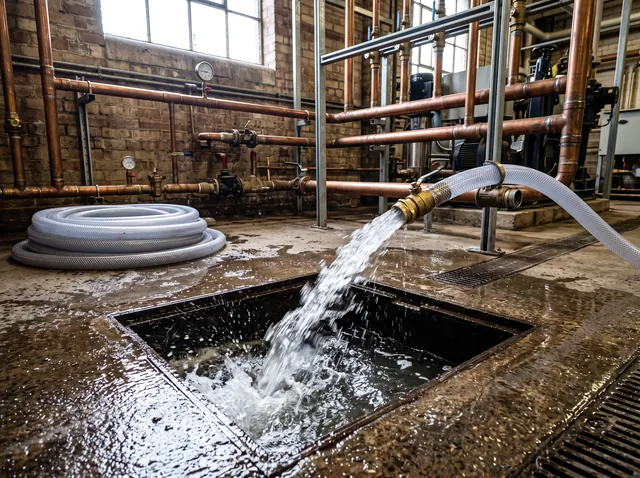
Mains water chlorination is the controlled disinfection of a mains water supply pipe and the pipework it feeds. The system is cleaned and flushed, filled with a chlorine based solution at a known concentration, held for a set contact period, then neutralised, flushed and sampled. A certificate follows once the laboratory results confirm it.
The work follows BS8558, the British Standard for services supplying water for domestic use in buildings. The wider duty comes from general health and safety law rather than from any statute about chlorination. ACOP L8, the HSE Approved Code of Practice on the control of legionella bacteria in water systems, advises on complying with the Health and Safety at Work etc. Act 1974 and the Control of Substances Hazardous to Health Regulations 2002. It is not law itself, but if you did not follow it you have to show you met the law another way.
For the local picture, see our chlorination services in Brentford, or our chlorination services in London for coverage across the capital.
How is the chlorination dose calculated?
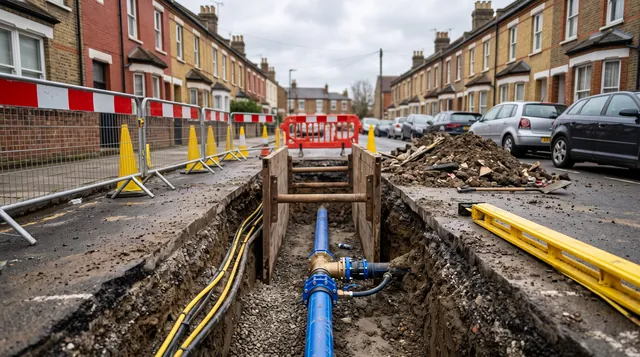
The dose is calculated from the volume of water the system holds. That volume comes from the length and internal diameter of every pipe run, plus the capacity of any tank or vessel in scope, and is matched to the target concentration for the contact time being used. A standard dose applied to every job is guesswork.
Underdose and the far end never reaches the concentration the standard requires. Overdose and you have created a needless corrosion risk and more chlorinated water to neutralise. Chlorine demand matters too: sediment, swarf, jointing compound, flux residue and biofilm all consume the dose before it reaches the organisms that matter, which is why the flush beforehand is not a courtesy step.
- Length and internal diameter The figures that set the volume. Bore matters most, because volume rises with the square of the radius.
- Storage and vessels Tanks and calorifiers add volume and usually need treating alongside the pipework.
- Material and condition Old iron or scaled pipework exerts far more chlorine demand than clean plastic or copper.
- System layout Branches, risers, capped spurs and dead legs, or they sit untreated inside a chlorinated system.
- Isolation points The extent of the work is defined and isolated, so nothing outside it is dosed.
- Water temperature Disinfection behaves differently in cold and warm water, which affects concentration and dwell.
Contact time and residual monitoring
Contact time is the period the chlorinated water is held still so the disinfectant can act on the pipe wall. Concentration and time trade against each other: a stronger solution is held for a shorter period, a weaker one for longer. Residuals are measured around the system throughout, not only where it was dosed.
Getting solution into a system is easy. Proving it reached everywhere is the work. Each outlet, branch and riser is drawn through in turn until water at the target strength arrives there, and only then does the clock start. A residual reading well below target means that section has exerted more demand than expected, or that solution never displaced the water sitting in it, so it is corrected and the dwell restarted there. Throughout, the system stays out of use, outlets are labelled, and readings, times and locations are recorded as they are taken.
Neutralisation and final flushing
Chlorine cannot be left in the system. Once the contact period ends, the solution is neutralised and the system is flushed with clean water until the residual falls back to the level of the incoming supply. Left in place, it causes taste and odour complaints and can attack pipe materials, fittings and seals.
The discharge route is agreed before the job starts, not improvised at the end. Chlorinated water is harmful to aquatic life, so it must never reach a surface water drain, a watercourse or a soakaway. It is neutralised before discharge, and where volumes require it, discharge to the foul sewer is agreed with the site and the sewerage undertaker in advance. Flushing then continues until the water leaving the outlets matches the incoming supply, and that final reading is recorded.
Microbiological sampling after chlorination
After the final flush, water samples are taken from agreed points and sent to a UKAS accredited laboratory. Sampling is the only stage that produces independent evidence. UKAS accreditation is the recognised mark of a laboratory's technical competence, and results from an unaccredited laboratory can be rejected by building control or a client's auditor.
Sample points are chosen to represent the system rather than to flatter it. On a mains job that usually means the point of entry, the nearest outlet, the furthest outlet on the run, and any storage vessel in scope. Technique matters as much as location: sterile bottles, the point prepared correctly, and samples kept cool and delivered inside the laboratory's holding time. Analysis normally covers total viable counts and the standard indicator organisms, with Legionella culture where the risk assessment calls for it. Where a result is unsatisfactory, the cause is investigated, the affected section treated again and the system resampled.
The certificate of chlorination and the report
The certificate is the deliverable. Everything measured on site exists so it can be evidenced here.
On completion you receive a certificate of chlorination and a full report. The report sets out the project and site details, the method used, the dosage and contact time achieved, the results of microbiological testing, and any recommendations arising from the work. Together they are the written proof that the system was disinfected and independently tested.
- Project and site details The property, the system treated, the date and the engineer who carried out the work.
- Methodology How the disinfection was performed, the disinfectant used, and the discharge arrangements.
- Dosage and contact time The concentration applied, the dwell held and the residual readings taken.
- Laboratory results The analysis from the UKAS accredited laboratory, with sample points and values.
- Recommendations Anything found that needs attention, such as a dead leg or a tank due for cleaning.
- A copy for the logbook The water safety logbook follows the building, so the certificate belongs in it.
For a fuller explanation of the document and what makes one valid, read our guide to the chlorination certificate.
Who asks to see the certificate?
Local authorities and building control, water companies including Thames Water, health and safety inspectors, insurers and incoming managing agents all ask for chlorination documentation at some point. It is usually required before a system can be brought online or a building handed over, and it is asked for again whenever the building changes hands.
They rarely ask at the same time. Building control wants it at completion, the undertaker before it will connect or reinstate a supply, and an insurer or inspector possibly years later. A system cannot be proved clean retrospectively, so a missing certificate means doing the job again.
Where the incoming supply is being connected or reinstated by the undertaker, their requirements sit on top of the disinfection and often need booking to a different date. Those are covered in mains chlorination and Thames Water requirements.
When is mains chlorination required?
Mains chlorination is required whenever pipework is new, has been opened up, or has stood unused. That covers new builds, refurbishments, extensions and modifications to existing pipework, and the reinstatement of decommissioned systems. It is also carried out after a repair or a suspected contamination, before the system goes back into service.
- New builds Mains and distribution that have never been in service.
- Refurbishment Pipework stripped out, replaced or left open while other trades worked around it.
- Extensions and alterations Additions to existing pipework, where the new work and what it feeds both need treating.
- Reinstating disused systems Vacant buildings and mothballed floors, where stagnation is the risk.
- After a repair Where a main has been cut into, burst or exposed.
- After an unsatisfactory result The system is investigated, treated again and resampled.
Where the whole installation is new and needs pre commission cleaning as well, see new water system chlorination.
Arrange mains water chlorination
We carry out mains water chlorination across Brentford, west London and the surrounding areas, for residential and commercial systems of every size. Work follows BS8558, samples go to a UKAS accredited laboratory, and the certificate and full report are issued on completion. If a certificate is needed urgently, say so when you enquire and we will tell you what is realistic.
For a useful quote, tell us the property type, the length and diameter of the pipework in scope, whether there is a tank or a boosted system, the discharge arrangements on site, and the date the certificate is needed by.
Call 020 4532 7773 to speak to someone who does this work, or arrange mains chlorination using the enquiry form.
Need a mains supply chlorinated and certified?
Tell us the system, the site and the date the certificate is needed, and we will confirm what is achievable.