
Chlorination Services in Brentford
Brentford is our base, so work in TW8 is close to home. We disinfect tanks, mains and pipework, sample through a UKAS accredited laboratory and issue the certificate that proves the system is clean.
What is chlorination and why is it required?
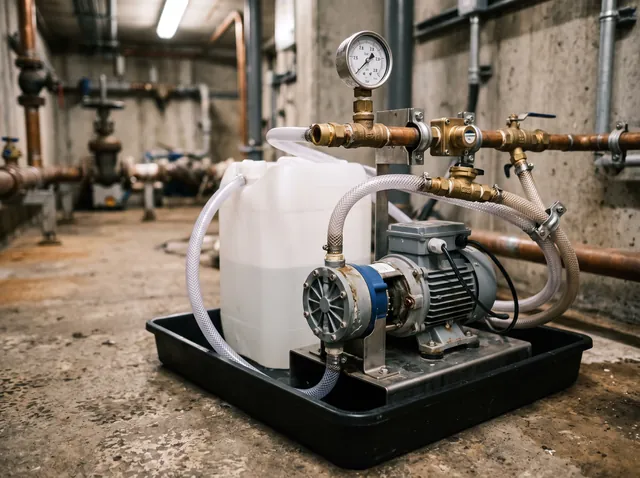
Chlorination is the controlled disinfection of a water system with a chlorine based solution, held at a set concentration for a set contact time, then neutralised, flushed and sampled. It is required whenever new, altered, disused or contaminated pipework and storage has to be proved clean before anyone drinks from it.
It is not the same thing as a flush. Flushing shifts loose debris but does not disinfect the pipe wall, and it produces no evidence. Chlorination ends in laboratory analysis, which is what everyone else asks to see.
That evidence is the chlorination certificate. For the wider picture see our chlorination services in London.
- BS8558 The standard our disinfection work follows
- ACOP L8 HSE Approved Code of Practice on legionella control
- UKAS Accredited laboratory analysis of every sample
Who needs chlorination in Brentford?
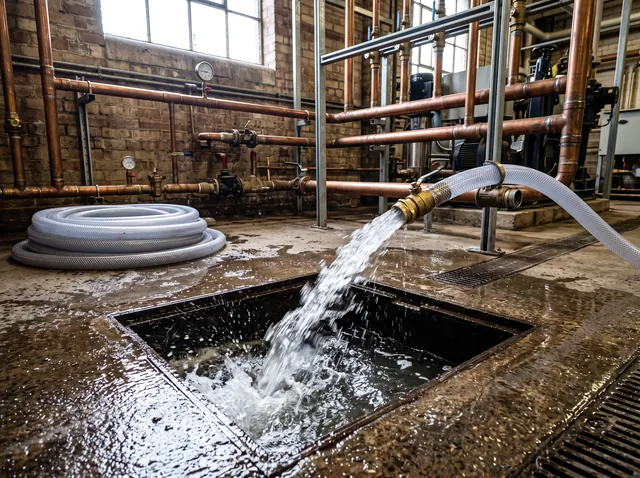
Chlorination is event driven rather than routine. It is needed for new or altered pipework, before a Thames Water connection is signed off, when a system returns to use after standing empty, after a positive Legionella result, and after repairs, contamination or tank work.
- New pipework Any installation, extension or renovation introducing new pipe.
- Before a Thames Water handover A connection is not approved until the pipework is disinfected, sampled and certified. See the Thames Water requirements.
- Recommissioning after disuse A flat, floor or building that has stood empty holds stagnant water.
- After a positive Legionella result Detection normally means disinfection, then resampling to confirm control.
- After repairs or contamination Anything that opens the pipework exposes the inside of the system.
- Following tank work A tank that has been cleaned, repaired or replaced is disinfected before the system it feeds is reused.
Which chlorination service do you need?
Three services sit under the one word: the incoming mains supply pipe, a complete new installation being commissioned, and potable water compliance in premises with vulnerable users. Most Brentford jobs need one of the three, and larger developments often need two. Each has its own page.
Mains water chlorination
The supply pipe between the main in the road and the building. Dosing concentration, contact time, neutralisation and safe discharge are all part of the method, because the undertaker is protecting the public network too. See mains water chlorination.
New water system chlorination
The whole internal installation on a new build or full refurbishment, treated as the closing stage of commissioning. It covers the pre commission clean and flush, the distribution pipework and the storage. For developers and M&E contractors, see new water system chlorination.
Potable water chlorination
The drinking water angle, where users are more vulnerable or scrutiny is higher: care homes, schools, healthcare premises and food businesses. The Water Supply (Water Fittings) Regulations 1999 sit behind it. See potable water chlorination.
Tank chlorination and disinfection
A cold water storage tank is disinfected after it has been drained, cleaned and inspected, not instead of it. Chlorine will not disinfect through sediment, scale or biofilm, so the tank is cleaned first, then disinfected, then sampled before the system returns to service.
This is the most common reason a disinfection fails its sample: the pipework is treated correctly, the tank feeding it is not, and the contamination washes back through. For how a tank clean runs, see cold water storage tank cleaning in Brentford. Where no control scheme exists, we can carry out Legionella risk assessments in Brentford at the same time.
The standards we work to
BS8558 is the British Standard covering the design, installation, testing and maintenance of services supplying water for domestic use within buildings. It is the document behind our flushing, disinfection and sampling method, and BS EN 806-4 is cited alongside it.
ACOP L8 is the HSE publication Legionnaires' disease. The control of legionella bacteria in water systems, fourth edition, 2013. It is an Approved Code of Practice, not legislation in its own right. It advises on complying with the Health and Safety at Work etc. Act 1974 and COSHH 2002, and carries a special legal status: if you are prosecuted and did not follow it, you must show you complied some other way. The dutyholder is whoever controls the premises in connection with work.
What you receive
- Site report What was treated, the method, the concentrations held and where samples were taken.
- Laboratory results UKAS accredited analysis, typically total viable counts, coliform bacteria and E. coli.
- Chlorination certificate The certificate itself, recording the system, method, results and date.
Keep all three in the handover or compliance pack. The certificate is the document asked for again later, sometimes years later, by building control, a managing agent or an auditor.
What happens if a sample fails
An unsatisfactory result means the system is re-treated and resampled, but the useful step is finding out why. A dirty tank, a dead leg, a section isolated during dosing or a contaminated sample point will all fail again. We find the cause before repeating the work.
Same day certification is available. Whether it is achievable depends on the size of the system and on laboratory turnaround, so tell us the date the certificate is needed by when you enquire and we will answer realistically before the work starts.
Sectors we serve in Brentford
Brentford runs from residential blocks by the canal to commercial buildings on the Great West Road.
- Property developers Certification tied to connection and handover dates.
- Building contractors The closing stage of mechanical commissioning.
- Letting agents and landlords Disinfection between tenancies and after voids.
- Facilities managers Planned and reactive work in occupied offices.
- Housing associations Communal storage and risers serving many homes from one tank.
- Schools and nurseries Work timed around term dates and shutdowns.
- Healthcare and care premises Vulnerable users and tighter documentation expectations.
- Councils and public buildings Certification within a documented water safety regime.
Frequently asked questions
How often do I need chlorination?
Chlorination is not a fixed interval service for most buildings. It is triggered by an event: a new or altered installation, a system returning to use after disuse, a positive Legionella or coliform result, or contamination after repair work. Planned re-chlorination is normally tied to tank cleaning frequency instead.
Is chlorination safe for drinking water?
Yes. The disinfectant is only in the system during the contact period. Afterwards the system is neutralised and flushed until residual chlorine is back within normal limits, and samples are analysed by a UKAS accredited laboratory before the water is used again. The method follows BS8558.
How long does chlorination take?
Most chlorination jobs are completed on site within a single working day, depending on the size and complexity of the system. The certificate then depends on laboratory analysis of the samples, which typically adds one to three working days unless same day certification has been agreed.
Book chlorination in Brentford
We are based at Q West on the Great West Road and cover London and the surrounding areas, residential and commercial alike. Being local means short notice attendance in TW8 is usually straightforward.
Tell us the property type, the extent of the pipework, whether a cold water storage tank is involved and the date any certificate is needed by. Call 020 4532 7773, or book chlorination in Brentford using the enquiry form.
Need chlorination and a certificate in Brentford?
Tell us the system, the site and the date the certificate is needed by, and we will tell you what is achievable.