
Chlorination Certificates: What They Are and When You Need One
If you are connecting a new water system, extending pipework or bringing a building back into use, you will be asked for a chlorination certificate before the water can be used. Here is what the certificate is, when it is required, what it should record, and how to get one in London.
What is a chlorination certificate?
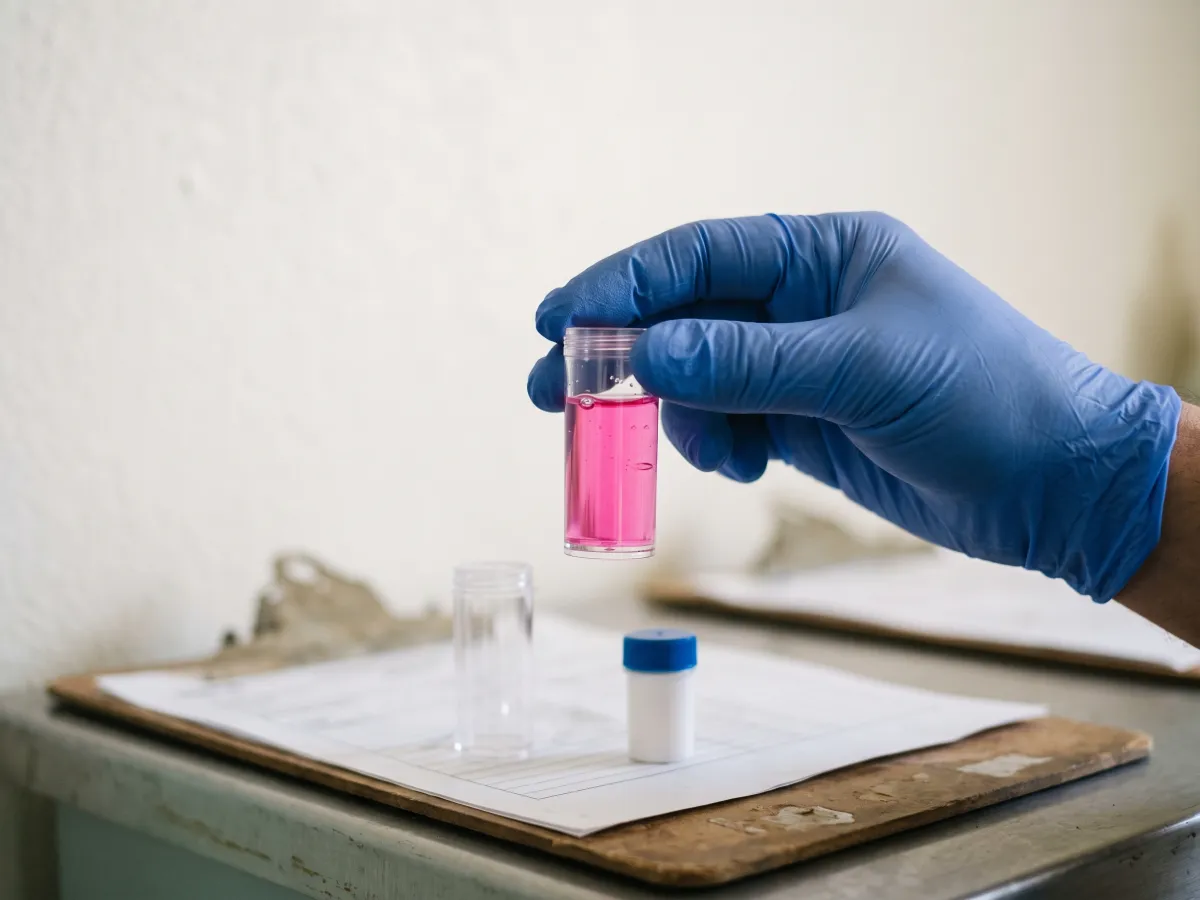
A chlorination certificate is a document confirming that a water system has been disinfected to recognised standards and is safe to use. It is issued after a competent contractor chlorinates the pipework or storage system and, in most cases, after a water sample has been laboratory tested to confirm the water is free from harmful bacteria.
Disinfection of new and modified water systems in the UK is normally carried out in line with BS EN 806-4 and BS 8558, the standards covering the installation and disinfection of water systems intended for human consumption. The certificate is the record of that work. It states what was disinfected, the method used, the standard followed and the results of any bacteriological analysis.
The word certificate can mislead. It is not a licence, and it is not issued by a regulator. It is a competent contractor's signed record that a defined piece of work was carried out properly on a defined date, supported by an independent laboratory result. Ask for the certificate and the analysis together, because one without the other carries very little weight.
When do you need a chlorination certificate?
If one of these describes your project or your building, expect to be asked for a certificate.
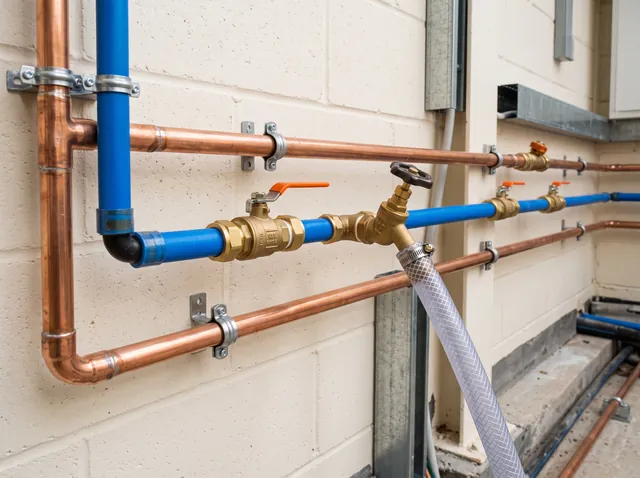
You need a chlorination certificate whenever a water system is newly installed, opened up, contaminated or brought back into use. The common triggers are new builds, alterations to pipework, a new mains connection, repairs that expose the inside of a pipe or tank, a failed water sample, reoccupation after a building has stood empty, and sector compliance requirements.
- New water systems and new builds A newly installed distribution system is disinfected before it is put into service, and the certificate normally forms part of handover. See new water system chlorination.
- Extensions and alterations to pipework Whenever the network is opened up, rerouted or added to, the affected section is disinfected again before it is used.
- New mains connections Water undertakers require a certificate before a supply is commissioned. See mains chlorination and Thames Water requirements and mains water chlorination.
- After repairs Any repair that exposes the inside of a pipe, fitting or tank creates a route for contamination, so the exposed section is disinfected.
- After a failed water sample Chlorination is the usual remedial step when analysis comes back unsatisfactory, and a fresh certificate follows the satisfactory resample.
- Before reoccupation Where a building has been empty and water has been left to stagnate, the system should be treated as suspect before people return.
- Stored water and tanks A cold water storage tank is physically cleaned first and then disinfected, so the certificate covers the tank as well as the pipework it feeds. See water tank disinfection.
- Sector compliance Care homes, schools, food premises and healthcare settings are commonly asked for current certification. Where water is for drinking or food use, see potable water chlorination.
Is a chlorination certificate a legal requirement?
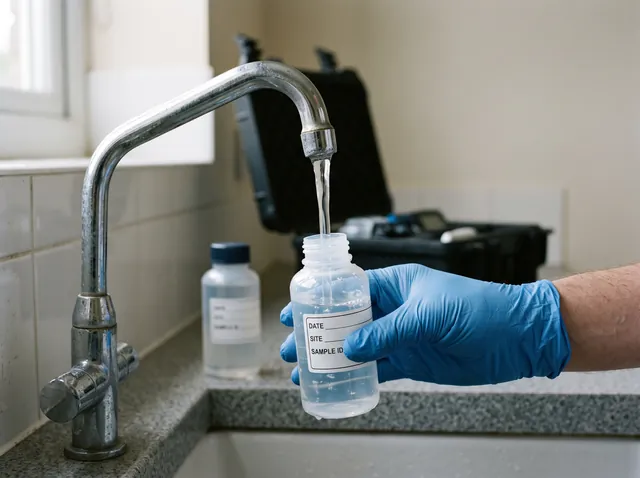
There is no single law that names the certificate. The underlying driver is the Water Supply (Water Fittings) Regulations 1999, which require that water systems do not contaminate the public supply, alongside the general duty to provide safe water. In practice, water undertakers such as Thames Water ask for one before commissioning a supply.
That distinction matters, because people sometimes conclude the certificate is optional. It rarely is. Your water undertaker will hold a connection until it is satisfied the pipework has been disinfected and tested. Building control, a principal contractor or a handover schedule may list it as a deliverable, and an insurer or an auditor can ask to see it long after the work is finished.
It sits alongside, rather than inside, your wider water safety duties. Disinfection proves the system was clean on a given date. Keeping it clean is managed through monitoring and the control measures set by your Legionella risk assessments in London, which is separate work and should be quoted separately.
What does the chlorination process involve?
Chlorination is a controlled sequence, not simply adding chlorine. The system is filled and dosed to a set concentration, held for a specified contact period, then flushed until chlorine returns to normal. A sample goes to a UKAS accredited laboratory, and the certificate is issued once the results confirm the water is safe.
- Clean and flush Debris, sediment and standing water are cleared out first. Tanks are physically cleaned, because chlorine will not disinfect through sediment or scale.
- Dose The system is filled and dosed with a chlorine based disinfectant at the concentration the standard sets for the work.
- Contact period The solution is held against the pipe and tank surfaces for the specified time, with the concentration checked around the system so the far end is treated too.
- Neutralise and flush Residual chlorine is neutralised and the system is flushed until the residual is back to the level of the incoming supply.
- Sample Samples are taken from agreed points and analysed at a UKAS accredited laboratory, typically for total viable counts, coliform bacteria and E. coli.
- Certify Once the results are satisfactory the certificate is issued, with the laboratory report attached to it.
Every stage earns its place. Skipping the pre clean means the disinfectant is consumed by dirt before it reaches the far end. Cutting the contact period leaves biofilm intact. Flushing badly leaves a corrosive residual in the pipework. The process has to be done correctly to be valid, so it should be handled by a competent water treatment contractor.
What is recorded on the certificate?
A chlorination certificate should record the address and the system disinfected, the date the work was carried out, the disinfection method and standard followed, the contractor's details, and, where sampling was carried out, the laboratory results. Keep it on file. You may need to produce it for building control, your water supplier, an insurer or a compliance audit.
| Recorded on the certificate | Why it matters |
|---|---|
| Address and system disinfected | Ties the certificate to a specific building and a specific section of pipework or storage, not to the site in general. |
| Date of disinfection | The certificate is a point in time record, so the date is what tells a reader whether it still reflects the system as it stands. |
| Method and standard followed | Shows the work followed a recognised procedure, normally BS EN 806-4 and BS 8558, rather than an ad hoc dose and flush. |
| Contractor details | Identifies who carried out the work and who is accountable for it if it is later questioned. |
| Sample points and results | The independent evidence that the disinfection worked. Without results, the certificate is only an assertion. |
| Laboratory used | Analysis from a UKAS accredited laboratory carries weight with water undertakers, insurers and auditors. Unaccredited results can be rejected. |
If a certificate you have been handed is missing any of those entries, ask for a corrected one. A single page saying the system was chlorinated, with no system description, no standard and no analysis attached, is the version that gets bounced back at handover.
How long is a chlorination certificate valid?
A chlorination certificate has no fixed expiry date. It confirms that a system was clean and safe at the point it was disinfected and tested, so it is a record rather than an open ended guarantee. Any new work that opens up the pipework normally requires fresh disinfection and a new certificate.
Water quality changes over time, particularly where a system is altered, left unused or poorly maintained. A certificate issued before a building was occupied says nothing about the water two years and one refurbishment later. Ongoing safety is managed separately, through monitoring, temperature control, tank inspection and the review cycle set by your risk assessment.
Clients, auditors and insurers sometimes set their own policy on how recent a certificate must be, so check the requirement rather than assuming an old one will pass. If the system has been extended or repaired since it was issued, it will not, and the honest answer is to rebook the disinfection.
Chlorination certificate versus water sampling
The two go together but they are not the same thing. Chlorination is the disinfection of the system. Water sampling is the laboratory test that proves the disinfection worked. A thorough certificate is backed by a satisfactory sample analysed at a UKAS accredited laboratory, so when you commission chlorination, check whether sampling and results are included.
Analysis of a potable system typically covers total viable counts, coliform bacteria and E. coli, with Legionella added where the risk assessment calls for it. UKAS is the national body that assesses laboratories for technical competence, which is why accredited results are the ones a water undertaker, an insurer or an enforcing authority accepts without argument. Unaccredited results can be questioned, and a rejected result usually means paying for the exercise twice.
Sampling also sets the timing. Work on site is often completed within a working day, but laboratory turnaround is typically one to three working days and the certificate follows the results. That is the commonest reason a certificate arrives later than a contractor expected, and it is avoidable by booking the chlorination before the connection date rather than after it.
Who can issue a chlorination certificate?
A competent water treatment or plumbing contractor who has carried out the disinfection to the relevant standards. It should not be self certified by someone without the right training and equipment. The person issuing it is stating that the work was done to standard and that the analysis supports it, so competence is the whole point.
Before you appoint anyone, it is worth asking five questions.
- Which standard will the disinfection follow, and will the certificate name it?
- Is water sampling included in the price, and which laboratory carries out the analysis?
- Is that laboratory UKAS accredited, and will the report be issued with the certificate?
- What happens if a sample fails, and how is the resample priced?
- What is the realistic turnaround from site visit to certificate in hand?
A quote that is materially cheaper than the others usually differs on one of those five lines rather than on the day rate, and most often it is the sampling that has quietly been left out.
Getting a chlorination certificate in London
London Water Treatment carries out chlorination and disinfection across London and the surrounding areas from our base in Brentford: new pipework and new system chlorination, mains chlorination ahead of a Thames Water connection, tank cleaning and disinfection, and remedial chlorination after a failed sample, with samples analysed by a UKAS accredited laboratory. See the full range of chlorination services in London.
Same day certification is available and we take last minute bookings for it. Whether it is achievable on a particular job depends on the size of the system and the laboratory turnaround, so tell us the date the certificate is needed by when you book, not once the connection is already held up.
To quote accurately we need the property type, what has been installed or altered, whether there is a cold water storage tank, roughly how many outlets are involved, any access constraints, and your deadline. Call 020 4532 7773, or get a chlorination certificate using the enquiry form.
-
We recently had the domestic pipework flushed and chlorinated in a newly developed apartment block and the mains pipe chlorinated before the Thames Water connection was made. They fitted us in quickly so as not to cause any delays to the mains connection. The chlorination certificate was issued same day. Very happy with the service and we will use then again for further projects on-going across London.
Darren Murphy Project Manager
Frequently asked questions
Who can issue a chlorination certificate?
A competent water treatment or plumbing contractor who has carried out the disinfection to the relevant standards. It should not be self certified by someone without the right training and equipment, and the certificate should be supported by analysis from a UKAS accredited laboratory.
Do I need a chlorination certificate for a domestic property?
Certificates are most common for commercial systems, new mains connections and larger installations, but they can also apply to domestic work, for example a new supply pipe or a stored water system. If in doubt, check with your water supplier or a water treatment specialist.
What does a chlorination certificate cost?
There is no flat rate. The price tracks the size and complexity of the system, how much pipework has to be dosed and flushed, access and whether the work has to run out of hours, and how many samples are needed. Ask for the sampling and laboratory analysis to be priced openly rather than left out of the quote.
How quickly can a chlorination certificate be issued?
Same day certification is available and we take last minute bookings. The limiting factor is usually the laboratory turnaround for the samples rather than the disinfection itself, so tell us your deadline when you book and we will tell you what is achievable on your system.
Need a chlorination certificate?
Tell us what has been installed or altered, where the site is, and the date the certificate is needed by.